


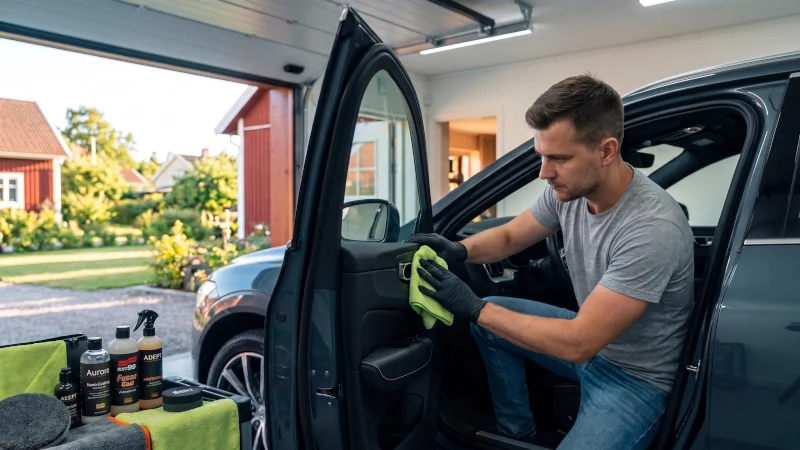
Piano black surfaces have become extremely popular and are used by most car manufacturers both inside and outside vehicles. The glossy black material gives the car an elegant and modern look – but it is also one of the most demanding materials to keep clean. Piano black collects fingerprints and dust quickly, and scratches easily if not handled correctly. In this guide, we cover how to clean, protect, and repair piano black surfaces the right way.
Key Points
- Always use Quick Detailer when cleaning – provides lubrication and reduces scratch risk
- Softest possible microfiber cloth – never a dry cloth directly on the surface
- Three protection options: wax (3-4 months), ceramic coating (several years), or PPF film (permanent)
- Scratches can be polished out – same technique as for car paint
- Protect the surface early – good protection makes ongoing care much easier
Why is Piano Black So Hard to Keep Clean?
Piano black is a high-gloss black material used on everything from steering column covers and gear shift panels to exterior details and mirror caps. The material is sensitive for several reasons: the dark color shows every dust particle and fingerprint, and the hard glossy surface reveals the smallest scratch more clearly than regular car paint.
It's therefore important to handle piano black surfaces correctly from day one – both when cleaning and when choosing a protection method.
Cleaning Piano Black
Regular and gentle cleaning of piano black surfaces keeps them looking great for a long time. The most important thing is to always use soft materials and products that provide sufficient lubrication – never a dry cloth directly on the surface.
Daily and Ongoing Cleaning
Spray a small amount of Quick Detailer directly onto a soft plush microfiber cloth and gently wipe the dirty surface. Quick Detailer provides the right lubrication, improves gloss, and reduces the risk of scratching the surface.
For dust in crevices and hard-to-reach areas, you can use a soft detailing brush with extra soft bristles. Work without pressure and brush away the particles, then collect them with a vacuum cleaner. An alternative is to use a paint blower to blow away particles and then vacuum them up.
Important: Protect the vacuum nozzle with insulating tape and always keep it away from the piano black surface. Even the softest brush can leave scratches on piano black – always use Quick Detailer as a lubricant when touching the surface.
Quick Refresh
For a quick refresh of the surface, a Quick Detailer and a clean microfiber cloth is all you need. Spray a small amount onto the cloth and gently wipe until the product is gone. The result is a glossy, glass-like surface free of fingerprints.
Why Quick Detailer Specifically?
Quick Detailer provides the right lubrication so that the microfiber and any dirt particles don't drag against the surface. It also improves the gloss and glass-like appearance – which is exactly what piano black needs. Without sufficient lubrication, the risk of scratching is high, even with the softest cloth.
Protecting Piano Black Surfaces
Good protection makes ongoing cleaning easier and faster, and keeps the surface in better condition for longer. There are three main options with different durability and protection levels.
Wax
Many manufacturers offer waxes specifically designed for decorative interior surfaces made from lacquered wood and piano black. Natural waxes deepen the color and create a pleasant slickness that makes cleaning easier and reduces scratch risk. The downside is that wax has shorter durability – plan to reapply approximately 3-4 times per year depending on how often you clean.
See our range of waxes at HQLights
Ceramic Coating
A more durable option is quartz or ceramic coatings. They provide outstanding gloss and glass-like appearance, and increase the surface hardness slightly. The high slickness means microfiber glides easily over piano black surfaces without scratching. Durability is several years, meaning you don't need to reapply regularly.
PPF Protective Film
The most durable and effective protection for piano black surfaces is transparent, black, or carbon-fiber-look protective film (PPF). The film protects against scratches and impacts from accessories and everyday use. PPF has self-healing properties – under heat, the surface returns to its original appearance. A piano black surface protected with PPF can look like new even after several years.
Removing Scratches from Piano Black
The process for removing scratches from piano black is not very different from polishing car paint. With the right technique and the right products, most surface scratches can be removed.
- Start with medium level: Choose a combination of polishing pad and polishing compound with medium abrasiveness. Depending on the results, you can move to a more aggressive or gentler compound.
- Finish with fine compound: Polish with a low-abrasiveness compound and pad to bring out the high gloss.
- Protect afterwards: Always finish with a protective layer – wax, ceramic coating, or PPF film depending on budget and skills.
Pro Tip: Always test the compound and pad combination on a small, hidden area first. Piano black can react differently than regular car paint, and it's better to be careful from the start.
Frequently Asked Questions About Piano Black
Can I use regular car wash products on piano black?
You can, but it's not optimal. Regular shampoos wash away protection and leave the surface unprotected. Better to use a Quick Detailer for ongoing cleaning and save car shampoo for more thorough washing.
How often do I need to clean piano black?
It depends on how much the car is used, but fingerprints and dust show up quickly on piano black. A quick refresh with Quick Detailer once a week is enough for most people.
Can I remove deep scratches myself?
Surface scratches can be polished out with the right technique. Deeper scratches that have gone through the material are harder to fix and may require professional help or replacement of the part.
Is ceramic coating worth it for piano black?
Yes, especially for surfaces that are used frequently or are hard to reach when cleaning. The coating makes the surface more resistant and cleaning faster – a clear difference compared to unprotected piano black.
What is PPF and is it hard to apply?
PPF (Paint Protection Film) is a thin self-adhesive film that protects the surface against scratches and impacts. It can be applied yourself on simpler surfaces, but for piano black we recommend professional application for the best result.
Summary
Piano black surfaces require more care than regular car surfaces, but with the right products and technique they stay looking great for a long time. The key is to always use Quick Detailer when touching the surface, protect it with wax, coating, or PPF, and deal with any scratches before they get worse.
- Always Quick Detailer as lubricant when cleaning
- Softest possible microfiber cloth – never a dry cloth
- Protect with wax, ceramic coating, or PPF
- Scratches can be polished out with the right technique
- Regular care takes 5 minutes – but makes a big difference
Need products for piano black care?
See Quick Detailers at HQLights
Or see our range of ceramic coatings and polishing compounds.
Last updated: April 25, 2026
Leave a comment