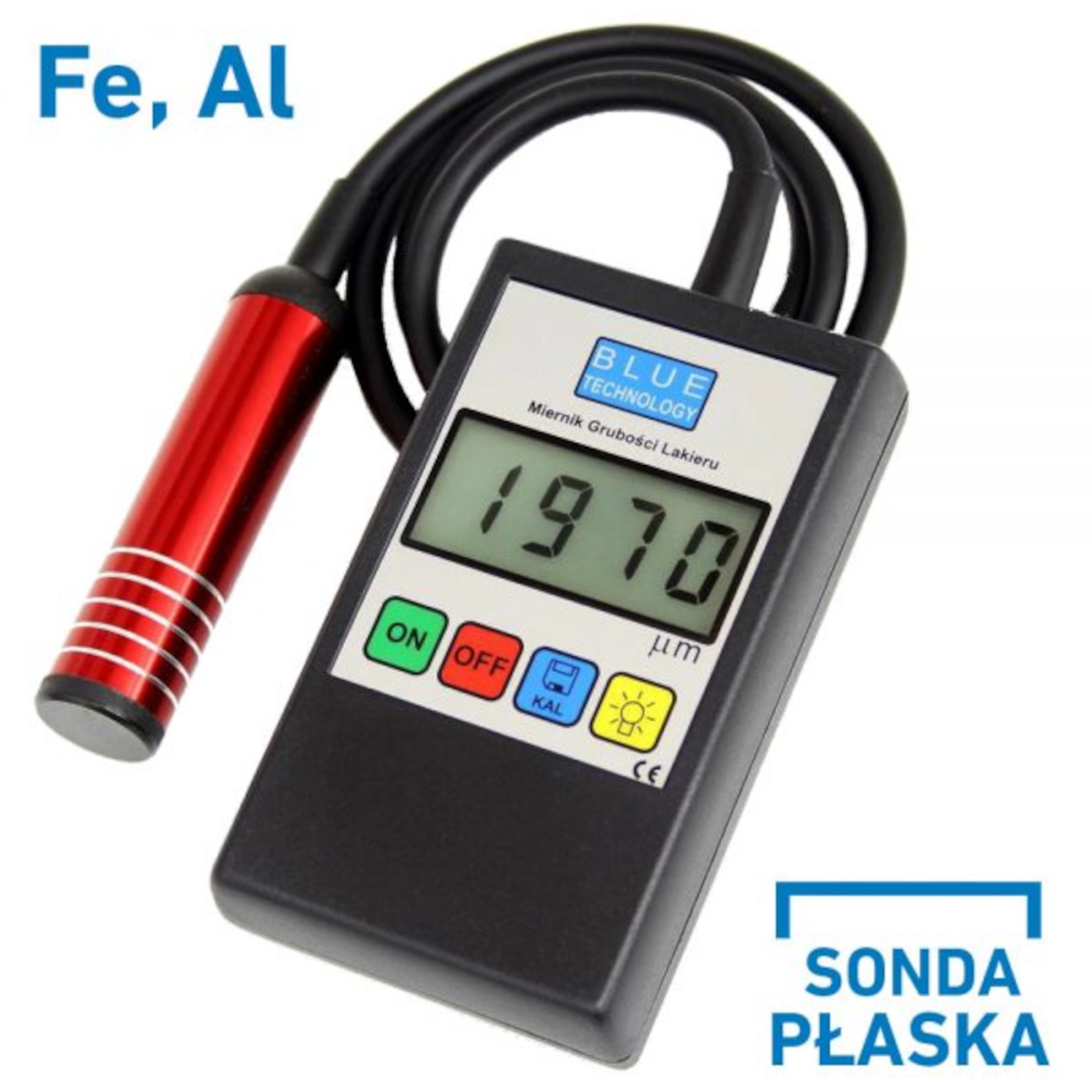
Quick Facts – Blue Technology Paint Thickness Gauge
- Brand: Blue Technology
- Model: MGR-11-S-AL
- Measurement range: 0–1990 µm
- Automatic substrate detection: steel, galvanised steel and aluminium (FE/AL)
- Probe: flexible cable, 80 cm
- Display: backlit, with built-in LED light
- Audio signals: indicates original paint, an extra layer of paint or filler
- Battery life: up to 100 hours on 2x 1.5V AA batteries
The Blue Technology MGR-11-S-AL measures paint thickness between 0 and 1990 µm and automatically detects whether the substrate is steel, galvanised steel or aluminium. The flexible 80 cm probe reaches hard-to-access areas of the bodywork, making it easier to assess previous paint damage and filler.
The gauge is aimed at automotive professionals who inspect used vehicles or check the quality of their own paintwork. The audio signals warn immediately if filler or an extra layer of paint is present beneath the surface, without the user needing to watch the display constantly.
The backlit display and built-in LED light ensure clear readings even at dusk or in dimly lit garages. See more paint protection and detailing products to complement the work after an inspection.
What makes the Paint Thickness Gauge a strong choice for car paint assessment?
The automatic substrate detection makes the gauge a strong choice, as the user does not need to manually switch modes between steel, galvanised steel and aluminium. The 10 µm resolution provides sufficient accuracy to distinguish original paint from resprayed sections or filler. The audio signal system also gives quick feedback without requiring a constant view of the screen.
The combination of two operating modes — continuous measurement and a HOLD function — makes it easy to document individual measurement points during an inspection.
How the Paint Thickness Gauge is used in vehicle inspection and detailing
- Checking used cars before purchase or sale
- Quality control after paintwork or bodywork repair
- Inspection of collision-damaged or restored vehicle sections
- Documenting paint thickness before trade-in or valuation
- Routine checks in reconditioning workshops and detailing studios
Technical Specifications
| Brand | Blue Technology |
| Model | MGR-11-S-AL |
| Measurement range | 0–1990 µm |
| Resolution | 10 µm |
| Probe cable | 80 cm, flexible |
| Substrate detection | Automatic, steel/galvanised (FE) and aluminium (AL) |
| Display | Backlit, large and easy to read |
| LED light | Built-in |
| Audio signals | 1 short (original paint), 2 short (extra layer of paint), 1 long (filler) |
| Operating modes | Continuous measurement and HOLD function |
| Battery | 2x 1.5V AA, up to 100 hours of operation |
| Automatic shut-off | After 2 minutes of inactivity |
| Operating temperature | -20°C to 40°C |
Suitable for: detailing studios, reconditioning workshops, car care companies, car dealers and private individuals inspecting used vehicles.
Industries: vehicle care, detailing, car sales, the reconditioning industry and vehicle inspection services.
Frequently Asked Questions (FAQ)
Does the Blue Technology MGR-11-S-AL Paint Thickness Gauge work on plastic or carbon fibre parts?
No, the Blue Technology MGR-11-S-AL Paint Thickness Gauge is designed specifically for steel, galvanised steel and aluminium. The gauge does not detect non-metallic surfaces correctly and should therefore not be used on plastic, fibreglass or carbon fibre parts.
How long is the battery life of the Blue Technology MGR-11-S-AL Paint Thickness Gauge?
The gauge runs on two 1.5V AA batteries and delivers up to 100 hours of continuous operation. Automatic shut-off after two minutes of inactivity also saves battery power during brief pauses. More measuring instruments for vehicle care are available in our range.
What sets the Blue Technology MGR-11-S-AL Paint Thickness Gauge apart from simpler gauges without substrate detection?
The key difference is the automatic substrate detection, which identifies steel, galvanised steel and aluminium without the user needing to manually switch measurement mode. Simpler gauges often require manual settings for each material type, which increases the risk of inaccurate readings during quick checks.