


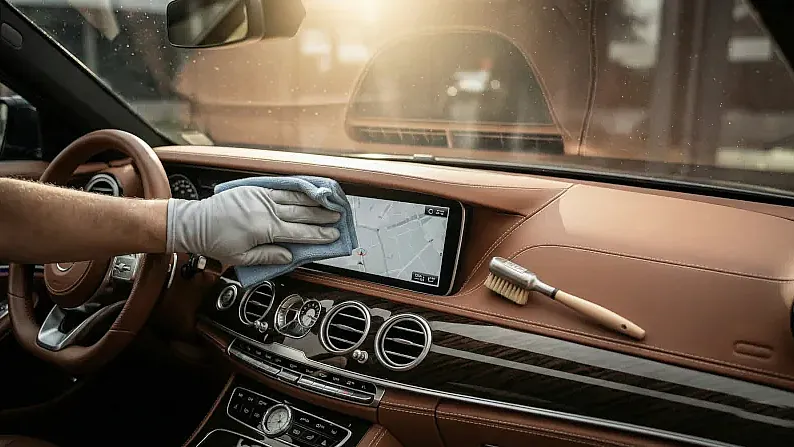
Weekly Car Interior Cleaning – A Quick Routine to Keep the Cabin Fresh
The car interior is the space you spend the most time in – and it quickly collects dust, fingerprints, grease marks and dirt. By dedicating a few minutes each week to a simple cleaning routine, you avoid a full-day effort during the monthly deep clean. Regular interior care also preserves materials such as leather, plastic and fabric, and keeps the car in better condition for resale.
This guide gives you a complete weekly programme in six steps – from plastic panels and screens to leather upholstery and floor mats.
Why clean the interior every week?
Dust, dirt and body oils break down materials over time. Plastic fades and cracks, leather dries out and fabric becomes harder to refresh the longer the dirt sits. A short weekly routine prevents this and ensures each individual cleaning session takes considerably less time.
Essential products
- Interior Quick Detailer
- Screen cleaner for LCD and piano black surfaces
- Glass cleaner
- Leather care product
- APC (all-purpose cleaner)
- Microfibre cloths – at least 3–4 (one per material type)
- Detailing brush
- Vacuum cleaner
Weekly programme in 6 steps
Step 1: Plastic panels and interior trim
Spray an interior quick detailer onto a soft microfibre cloth (not directly onto the surface) and wipe all plastic details – dashboard, door panels, centre console, steering column and air vents. The product removes dust, fingerprints and grease marks whilst refreshing the appearance of the plastic.
Step 2: LCD screens and piano black surfaces
Infotainment screens, digital instrument clusters and piano black trim require a product that leaves no streaks or scratches. Use a dedicated screen cleaner – spray onto a clean microfibre cloth and wipe gently. Avoid household cleaning products that can damage the screen's coating.
Step 3: Interior glass surfaces
The inside of the windows collects a film of vapour residue, moisture and fingerprints. Spray glass cleaner onto a waffle-weave microfibre cloth and wipe all interior glass. Work in straight strokes and finish with a dry microfibre cloth to avoid streaks. Clean windows reduce misting and improve visibility – especially in Nordic winter conditions.
Step 4: Leather care
Leather upholstery needs regular attention to prevent it from drying out and cracking. Spray a leather care product or leather quick detailer onto a microfibre cloth and gently wipe the seats, headrests, armrests and leather sections of the steering wheel. The product cleans and moisturises the leather in one step. Allow the surface to air dry.
Step 5: Rubber floor mats
Remove the rubber mats from the car. Spray with APC (all-purpose cleaner) and scrub with a brush. Rinse under running water and allow the mats to air dry or wipe with a microfibre cloth before placing them back in the car.
Step 6: Fabric mats and upholstery
Vacuum the fabric mats thoroughly every week – especially the footwells, under the seats and in the gaps between the seat and centre console. Accumulated dirt and grit wears down the fabric and can work its way into the carpet beneath if not removed regularly. For stains, use a fabric cleaner and a brush.
Summary – your weekly routine
The entire routine takes 10–15 minutes and prevents dirt from building up. Here is the checklist:
- Plastic panels – interior quick detailer + microfibre cloth.
- Screens and piano black – dedicated screen cleaner.
- Interior glass – glass cleaner + waffle cloth.
- Leather surfaces – leather care on microfibre cloth.
- Rubber mats – APC + brush + rinsing.
- Fabric mats – vacuuming + spot treatment as needed.
A few minutes per week keeps the interior in top condition and makes the monthly deep clean considerably quicker.
Suitable for: Car owners, car enthusiasts, professional detailers, reconditioning technicians, taxi drivers and fleet managers wanting to keep the cabin fresh.
Industries: Vehicle care, car reconditioning, detailing studios, car dealerships, car hire, taxi and fleet management.
Frequently Asked Questions About Weekly Car Interior Cleaning (FAQ)
How long does a weekly interior cleaning session take?
With the right products ready, the entire routine takes 10–15 minutes. The most important steps – wiping plastic panels, screens and a quick vacuum – can be done in under 10 minutes. Leather care and rubber mat cleaning add another 5 minutes. The regularity means each session gets faster because the dirt never has time to build up.
Can you use APC (all-purpose cleaner) on the car's plastic interior trim?
APC works on hard-wearing surfaces such as rubber mats and door sills, but it is not recommended for soft plastic panels and the dashboard. APC lacks the moisturising and anti-static properties that an interior quick detailer provides. Use a dedicated interior product on plastic panels, screens and sensitive surfaces – it cleans, protects and reduces static build-up that attracts dust.
How often does leather upholstery in a car need to be treated?
A light clean and moisturise every week with a leather quick detailer is sufficient to keep the leather in good condition. A deeper treatment with leather conditioner is recommended every 4–6 weeks, or more frequently if the car is parked in direct sunlight. Leather that is not treated regularly dries out, cracks and fades – especially in the Nordic climate with large temperature variations.
Leave a comment