


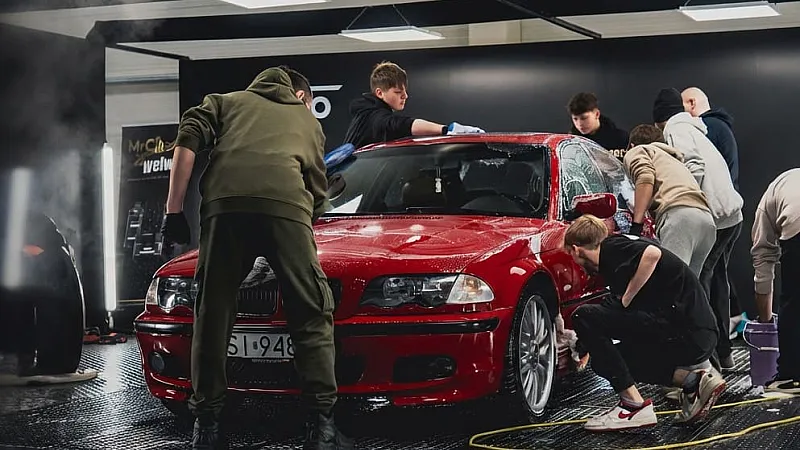
The Perfect Car Wash: A Step-by-Step Detailing Guide
The correct washing technique is the main element in keeping your car's paintwork in excellent condition. Did you know that most swirls and scratches occur during improper car washing? Follow our simple set of rules that will facilitate your weekly car wash and save you a lot of time.
Necessary Products and Accessories
- **For Wheel Arches:** APC (All Purpose Cleaner), Long-handled Brush, Tar and Glue Remover, Metallic Contaminant Remover.
- **For Wheels:** Wheel Cleaning Product, Tire Cleaner or APC, Wheel and Tire Brushes.
- **Pre-Wash:** Active Foam, Pressure Washer, Foam Lance (PA Foam Lance) or Manual Foam Sprayer.
- **Contact Wash:** Two Buckets, Dirt Separators (Grid Guard), Wool or Microfiber Wash Mitt, Car Shampoo.
Step 1: Cleaning Wheel Arches and Wheels
Wheel Arches: Removing Heavy Contamination
- Start by thoroughly rinsing the wheel arches using a pressure washer.
- Apply APC and use the long-handled brush to carefully clean the surfaces. Rinse thoroughly.
- To remove tar or asphalt residues, use a Tar and Glue Remover (the surface must be dry).
- Use a Metallic Contaminant Remover on the wheel arch and suspension elements to address iron fallout.
Wheels and Tires: Getting Ready for Shine
Start with the tires! Apply Tire and Rubber Cleaner or APC, let it dissolve the dirt, then scrub thoroughly with a brush. Repeat to best prepare the surface for tire dressing.
Next, clean the wheels. Select the product based on the level of soiling:
- **Heavily Soiled:** Use an acidic cleaner carefully and according to the manufacturer's recommendations.
- **Brake Dust:** Use Deironizer (a chemical metallic contaminant remover) for brake pad dust.
- **Tar Spots:** Use Tar and Glue Remover on dry wheels.
- **Regular Care:** Use cleaners designed for regular Wheel Cleaning Agents.
Pro Tip: Roll the car forward half a wheel turn and use your brush and cleaner to clean the spot that was previously hidden by the brake caliper.
Step 2: Pre-Wash with Active Foam
The job of the active foam is to safely remove as much contamination as possible without contact. Apply Active Foam with your foam lance or manual foam sprayer, working from the bottom of the car upwards. After 5-8 minutes, when the foam starts to run off, begin rinsing under pressure from the bottom upwards. This ensures the foam stays active on the lower, dirtier parts for longer.
Important Note:
Active foam alone will not completely clean the car. It only removes the heaviest dirt like sand, mud, and salt. The remaining film must be removed in the contact wash step.
Step 3: Contact Wash (Two-Bucket Method)
The contact wash removes the remaining contaminants. Use a wool or microfiber Wash Mitt, Car Shampoo, and two buckets with Dirt Separators. The separator prevents dirt from floating back up into your wash mitt. We recommend a separator in both the wash and rinse bucket.
Wash the car in a shaded area using straight, linear movements (never circular!). Work from the top down:
- Start with the roof, then hood, windows, and sides.
- Leave the dirtiest parts (bumpers, lower door panels, sills) until the very end.
- After washing each panel, rinse the mitt thoroughly in the rinse water bucket, wring it out, and then reload it with shampoo from the wash bucket.
Step 4: Drying and Final Finish
Safe Drying
Use a quality Microfiber Drying Towel, waffle weave, or Silk Dryer. Start drying horizontal elements and windows, then move to vertical elements and door jambs. Lay the towel flat and gently pull it across the panel (do not press!). You can also use compressed air to remove water from crevices.
**Warning:** Never press the towel forcefully onto the paint. Gently glide it to absorb the water.
Quick Detailer Application
To eliminate fresh water spots, boost the paint's gloss, and strengthen any existing wax, we recommend applying a Quick Detailer. Apply the product to cool, dry paint using an atomizer, spread it evenly with a microfiber towel, and buff until it disappears with a second, dry towel.
Professional Groups and Industries
These products and methods are most suitable for:
1. Professional Groups
- **Professional Detailers & Car Care Technicians:** Individuals running their own detailing businesses or working in professional car care facilities.
- **Protection Specialists (PPF & Ceramic Coatings):** Those who need to ensure a perfectly clean surface before applying ceramic coatings or protective film.
- **Car Mechanics and Workshops:** For quick and effective cleaning of wheel arches and engine bays during service.
- **Vehicle Sales (Car Dealers):** For reconditioning used vehicles and ensuring new cars have a flawless finish before handover.
2. Industries & Jobs
| Industry / Job Type | Suitable for (Examples) |
|---|---|
| **Car Care & Detailing** | Performing polishing, waxing, ceramic treatments, and deep interior cleaning. |
| **Transport & Logistics** | Washing expensive fleets or specialty vehicles (e.g., trucks/buses) where scratch resistance is important. |
| **Vehicle Sales** | Sales preparation (reconditioning) and maintenance of display vehicles. |
| **Boat Care & Marine** | Many products (APC, waxes) can be used for cleaning boat hulls and decks. |
Frequently Asked Questions (FAQs)
1. Why should I use the two-bucket method?
The two-bucket method (one bucket with shampoo and one with plain rinse water) minimizes the risk of dirt and grit transferring from the car's paintwork back onto the wash mitt. Dirt separators (Grid Guard) keep the dirt at the bottom of the bucket, protecting the paint from wash-induced scratches.
2. Is Active Foam really necessary?
Active foam (Active Foam) is a crucial pre-wash step. Its job is to lift away most loose contaminants (sand, mud) before you touch the car with a wash mitt. This makes the subsequent contact wash significantly safer and reduces the risk of swirls.
3. When should I use Iron Remover?
Iron Remover should be used after the washing stage but before polishing or waxing. It removes embedded metallic particles, such as brake dust, that do not come off during a standard wash. These particles often feel like small "dots" on the paint and must be removed for a completely smooth surface.
4. Why should I dry the car with a towel?
If you allow the water to air dry, minerals in the water can create unattractive spots and streaks ("water spots"). By using a gentle microfiber drying towel (Drying Towel), you quickly dry the car and remove residual water without scratching the paint.
Leave a comment