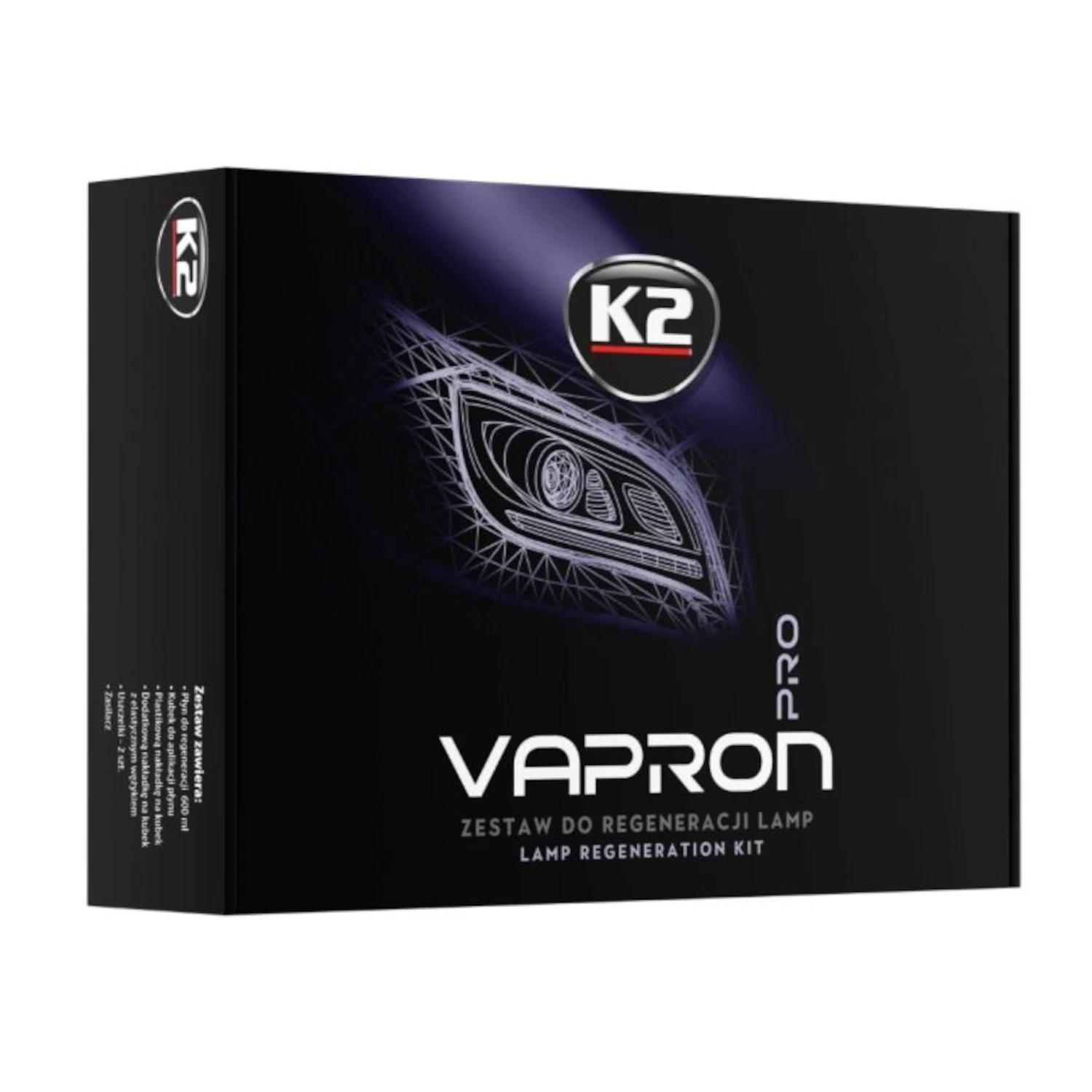
Quick Facts – K2 Vapron Headlight Restoration Kit
- Brand: K2
- Model: K2000013
- Type: Headlight restoration kit with vapour coating
- Volume: 600 ml
- Material: Polycarbonate (liquid coating)
- Power supply: 220V
- Application: Professional restoration of polycarbonate headlight lenses
- Contents: Regeneration fluid, application cup, plastic cup cover, flexible hose, 2 seals
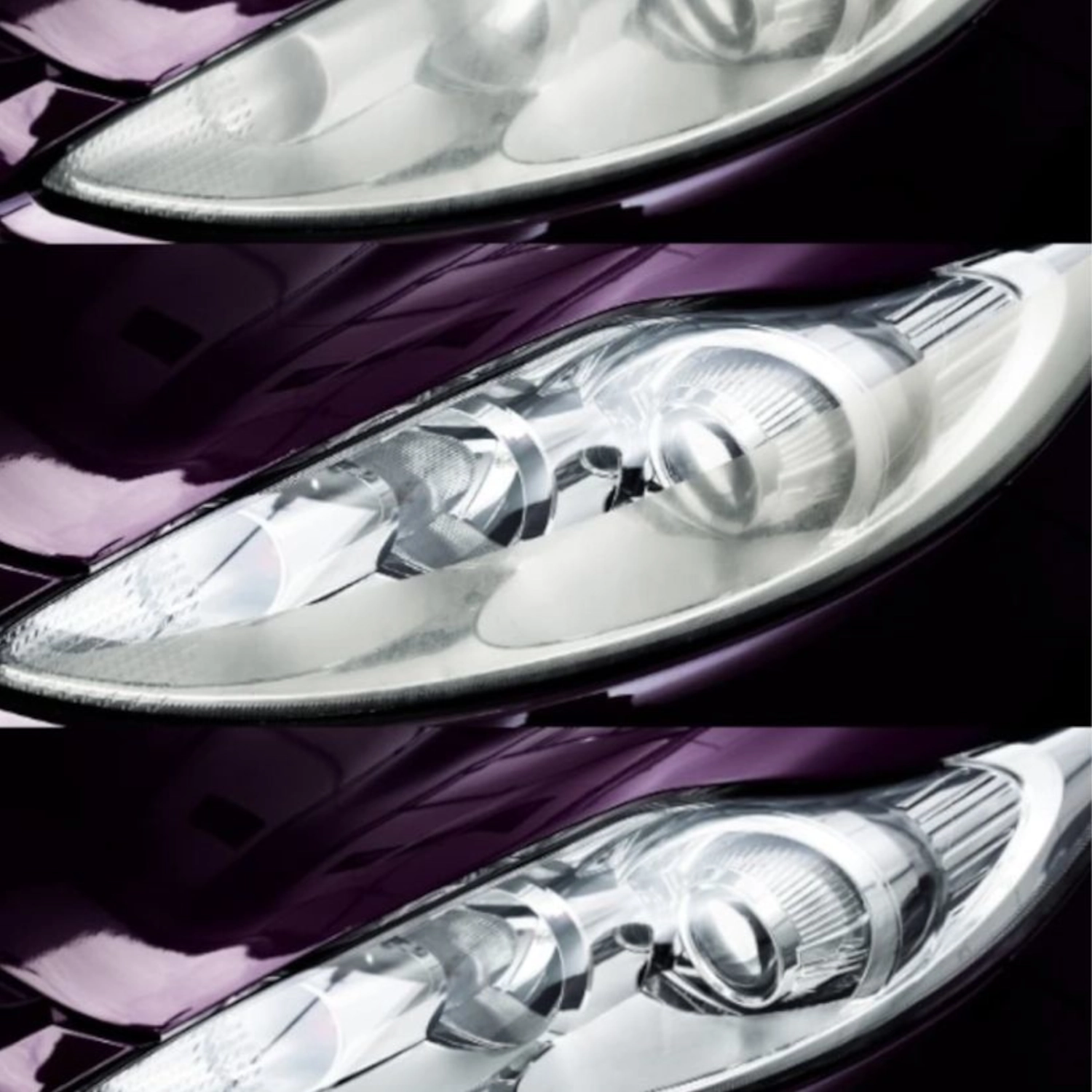
K2 Vapron is a professional kit for restoring polycarbonate headlight lenses without the need for removal. The kit returns cloudy, yellowed, or damaged headlights to a clear, factory-like appearance by applying a new liquid polycarbonate coating via the vapour method.
The process involves heating the liquid polycarbonate in a specially designed applicator, whereupon the vapours settle on the damaged lens and build up a new transparent layer. The result is an even, clear surface that restores the headlight's original optical properties. See more K2 products for car care in our range.
The kit is intended for professional use and requires correct surface preparation – the existing, damaged factory protective layer must be removed entirely with sandpaper before application. The kit is not suitable for glass headlights.
What is K2 Vapron and why choose it?
K2 Vapron is a vapour-based restoration system that differs from conventional sanding and polishing methods. Rather than merely removing the damaged surface layer, the kit deposits a new polycarbonate layer via vapour coating, delivering a more durable and optically clear result. The method is suited to headlights in varying condition, regardless of the vehicle's age or the extent of the damage.
For optimum results, the kit should be used together with K2 Vapron Refill 600 ml. The included flexible hose enables application even on hard-to-reach headlights without the need to remove the lamp unit.
Where is this product suitable?
- Reconditioning workshops and car care businesses with professional equipment
- Detailing studios offering headlight restoration as a service
- Vehicle workshops requiring fast and effective headlight rehabilitation
- Car preparation specialists and detailing enthusiasts with experience in surface treatment
Technical Specifications
| Brand | K2 |
| Model | K2000013 |
| Volume (regeneration fluid) | 600 ml |
| Method | Polycarbonate vapour coating |
| Power supply | 220V |
| Suitable substrate | Polycarbonate (not glass) |
| Package contents | Regeneration fluid 600 ml, application cup, plastic cup cover, flexible hose, 2 seals |
| Intended use | Professional use |
Suitable for: Professional detailers, reconditioning workshops, car care businesses, and experienced hobbyists working with headlight restoration on polycarbonate lenses.
Industries: Detailing, car care, vehicle reconditioning, automotive workshops.
Frequently Asked Questions (FAQ)
Does the K2 Vapron kit work on all types of headlights?
No. The K2 Vapron Headlight Restoration Vapour Coating Kit 600ml is developed exclusively for headlights with polycarbonate lenses. The kit is not suitable for glass headlights, as the vapour coating method is designed for plastic substrates. Always check the headlight material before application.
What volume and accessories are included in the K2 Vapron kit?
The K2 Vapron Headlight Restoration Vapour Coating Kit 600ml contains 600 ml of regeneration fluid, an application cup, a plastic cup cover, an additional cup cover with a flexible hose for hard-to-reach headlights, and two seals. The kit requires a 220V power supply. For continued use, K2 Vapron Refill 600 ml is recommended as a refill. See also more headlight restoration products in our range.
What sets the K2 Vapron kit apart from other headlight restoration methods?
Unlike conventional methods that rely solely on sanding and polishing, the K2 Vapron Headlight Restoration Vapour Coating Kit 600ml deposits a new polycarbonate layer via vapour coating. This means the damaged surface is not merely removed but replaced with a new transparent layer, contributing to a more durable and optically clear result. The method does, however, require correct preparation – the existing protective layer must be removed entirely with sandpaper before application to ensure the coating bonds correctly.