


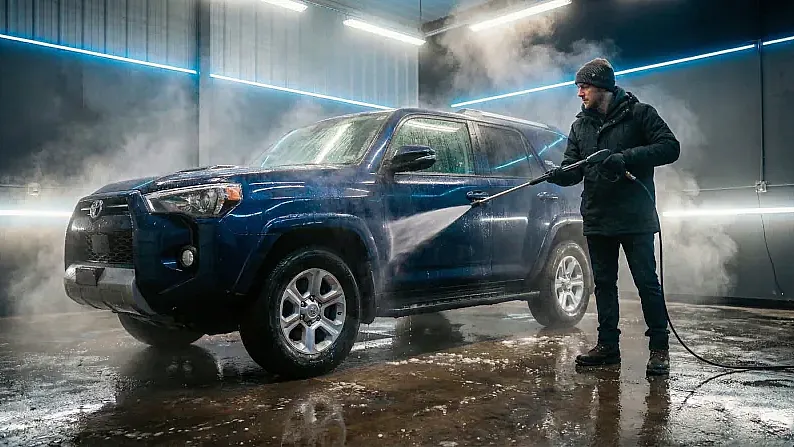
How to Wash Your Car in Winter – Avoid Frozen Doors and Scratches
Washing your car in winter is a bit trickier than in summer, but it is entirely doable. The key is to work efficiently, keep things simple and dry thoroughly so you avoid frozen doors, locks and rubber seals. In this guide we walk through the entire process step by step — with product recommendations and common mistakes to avoid. All products mentioned are available across Europe from HQLights.
Can You Wash a Car in Freezing Temperatures?
Yes, but it depends on how cold it is and where you wash. Around 0 to -2°C usually works well if you work quickly and dry straight away. At -5°C and below things get more problematic — ice on the paintwork, frozen seals and locks that stick. In those conditions a quick rinse at a self-service bay or waiting for milder weather is the better option.
Quick Overview: the Winter Routine in Six Steps
- Pre-wash with snow foam or prewash
- Rinse thoroughly
- Hand wash with a wash mitt and two buckets
- Rinse again
- Dry immediately with a microfibre drying towel — pay extra attention to seals and door jambs
- Apply a light layer of spray sealant from time to time
Winter Wash Step by Step
1. Choose the Right Location and Timing
If possible, wash somewhere sheltered from the wind, ideally with slightly warmer air. A wash bay works well, but a carport or garage with drainage is also fine. Avoid washing in strong wind and extreme cold unless absolutely necessary.
2. Start With a Pre-wash — This Is Where You Save the Paint
During winter, road film, salt and grit cling to the paint much harder than usual. A pre-wash loosens all of that so you do not need to rub dirt and grit across the surface — which is the most common cause of wash scratches. Apply snow foam or prewash to the entire vehicle, let it dwell briefly (never let it dry on), and rinse thoroughly. Products like Funky Witch Tsunami or ADBL Snow Foam work well as acidic or pH-neutral pre-wash options — choose based on how dirty the car is.
3. Degrease Lower Panels if Needed
If you have heavy salt film and winter grime, apply degreaser to the lower sections: sills, rear bumper and behind the wheel arches. Let it dwell briefly and rinse off. This step makes a big difference if the car has been in salted road conditions for a long time.
4. Hand Wash — But Skip the Sponge
Use a wash mitt and two buckets: one with car shampoo and one with clean water to rinse the mitt. Wash from top to bottom and rinse the mitt frequently. Wash mitts from brands such as SEVEN or ADBL have deep fibres that trap dirt and reduce the risk of scratches — a sponge, by contrast, pushes grit straight into the paint.
If you have grit guards in your buckets, they catch sand and grit at the bottom so you do not transfer contaminants back to the paint.
5. Rinse and Dry Immediately
Drying is what determines whether your winter wash goes smoothly or the car freezes up. You have a few minutes before the water starts to freeze. Use a large microfibre drying towel — preferably a twisted-loop or waffle type that absorbs water quickly. Pay particular attention to door handles, wing mirrors, fuel cap and rubber seals.
Tip: open the doors briefly and lightly dry the jambs if you can, without soaking the interior.
6. Prevent Frozen Doors and Locks
This step prevents the most frustration during winter. When you have finished: open and close every door once to check whether anything is starting to freeze. Wipe the rubber seals with a dry cloth. If you regularly have issues with seals sticking, consider using a rubber seal protectant that leaves a thin barrier on the rubber.
Common Mistakes When Washing in Winter
Most wash damage does not happen because you wash — it happens because you wash incorrectly. Here are the most common mistakes:
- Washing without a pre-wash and rubbing dirt directly across the paint — causes scratches
- Using a sponge instead of a wash mitt — pushes grit into the surface
- Letting cleaning products dry on cold paint — can leave stains
- Not drying immediately — water freezes in seals, locks and door jambs
- Soaking door jambs and seals unnecessarily — increases the risk of ice
What Products Do You Need for a Winter Wash?
You do not need 20 products. The following covers a safe and thorough winter wash:
| Product | Why | Example |
|---|---|---|
| Snow foam / prewash | Loosens salt and road film without rubbing | Funky Witch Tsunami, ADBL Snow Foam |
| Car shampoo | pH-neutral shampoo safe on all surfaces | Funky Witch Wash&Posh, 3D Car Care SiO2 Shampoo |
| Wash mitt | Deep fibres trap dirt — far safer than a sponge | SEVEN Wash Mitt, ADBL Scrub Mitt |
| Buckets + grit guards | Two-bucket method with grit guard traps contaminants | SEVEN Buckets + Grit Guards |
| Microfibre drying towel | Absorbs water quickly — critical in winter | SEVEN Drying Towels, ADBL Mini Twisted Towel |
| Spray sealant | Easy protection that makes salt and dirt release more readily | Funky Witch Botox, 3D Car Care Spray Sealant |
| Degreaser | Removes heavy salt film from sills and wheel arches | KiurLab, ADBL |
Protect the Paint Between Washes
During winter it is particularly worthwhile having a base layer of protection on the paint. Salt, road grit and dirt cling harder to unprotected surfaces, making every wash tougher. A spray sealant is the simplest option — apply it after washing on clean paint and buff off with a microfibre cloth. It takes a couple of extra minutes but makes a real difference: the next wash goes faster and dirt releases more easily.
If you already have ceramic coating or a good sealant on the paint, you do not need to do this every time — but a layer of spray sealant as maintenance every other wash helps the protection last longer through winter.
Wheels and Tyres in Winter
Winter wheels take a beating from brake dust, salt and road grime. Clean the wheels separately with a wheel cleaner — pH-neutral if you wash regularly, or an acidic cleaner such as KiurLab Acid Wheely for heavier build-up. Use a dedicated brush or mitt for the wheels so you do not transfer brake dust to the paintwork.
You can treat the tyres with a tyre dressing such as Funky Witch Dark&Shine after washing. It gives a clean finish and protects the rubber from drying out in the cold.
Suitable for: Car owners, enthusiasts and professional detailers across Europe who want to wash safely through the winter months.
Industries: Vehicle care, car reconditioning, fleet management and detailing supply retailers.
Frequently Asked Questions (FAQ)
How often should you wash your car during winter in Europe?
Ideally every 2–3 weeks during the winter season, or as soon as the car is visibly salty. Road salt is the single biggest cause of long-term damage to paintwork, wheels and underbody components. A regular pre-wash with snow foam goes a long way towards keeping salt build-up under control between thorough washes.
What products are needed for a safe winter car wash without scratches?
The essentials are a snow foam or prewash for the pre-wash stage, a pH-neutral car shampoo, a wash mitt (never a sponge), two buckets with grit guards, a microfibre drying towel and a spray sealant for easy protection. All of these products are available from HQLights with delivery across Europe, from brands such as Funky Witch, ADBL, SEVEN and 3D Car Care.
Can you apply wax or sealant to a car during winter?
Yes. A spray sealant is the easiest option in cold weather — apply it straight after washing on clean paint and buff off with a microfibre cloth. Products such as Funky Witch Botox are quick to use even in low temperatures. Traditional wax also works but requires slightly warmer working conditions, making spray sealant the most practical choice during the European winter.
Read more! Car Care & Detailing FAQ – Common Questions in Europe (winter 2026)
Leave a comment